

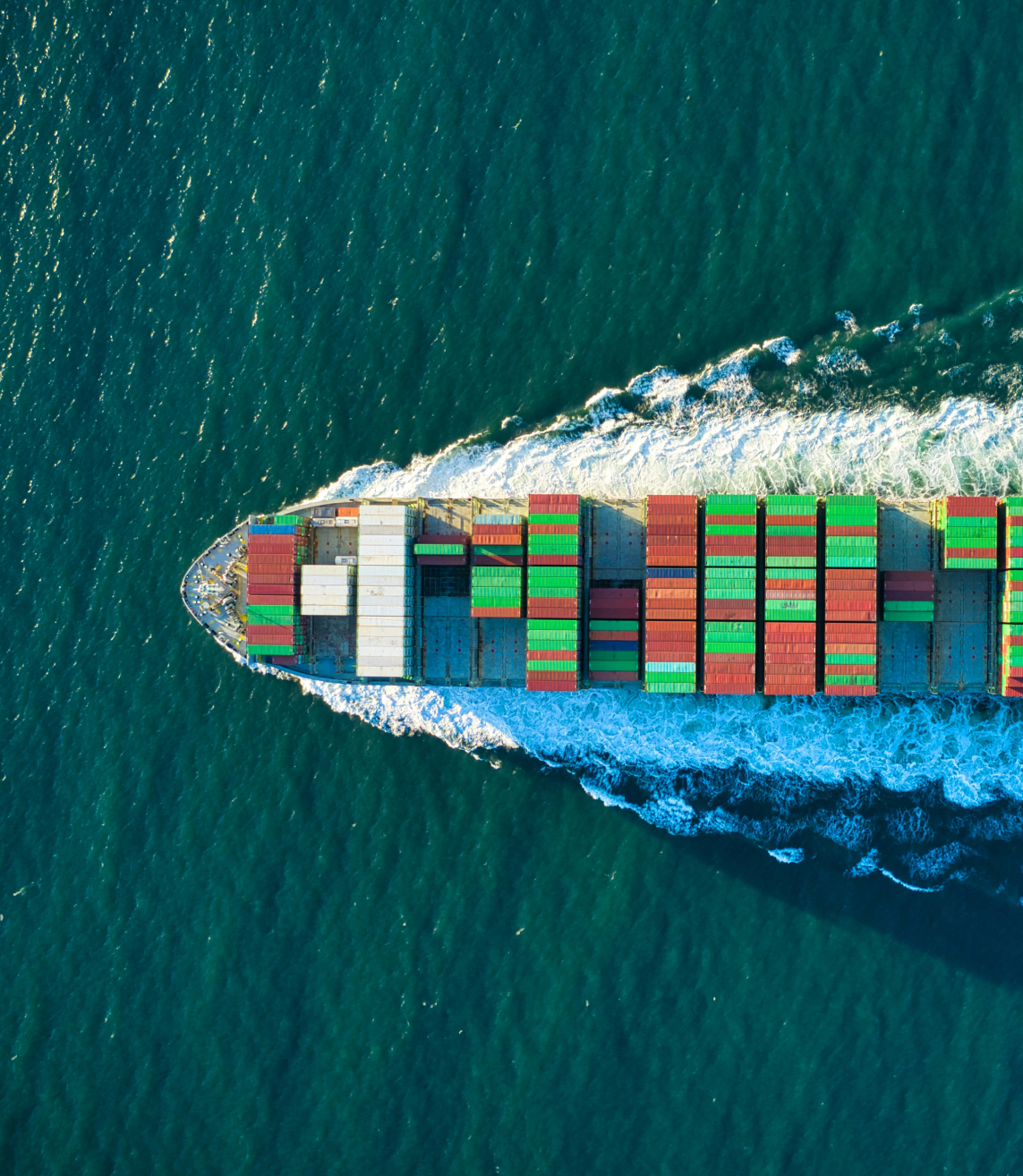
In the global vegetable oil trade, large parcel shipments are common. A broker may wait until several thousand tons are accumulated in port tanks before loading a bulk vessel. On paper, this looks efficient. Ocean freight per ton is usually lower with a bulk ship.
But sea freight alone does not define total cost.
Before the vessel even arrives, cargo must be stored. Tanks must be rented. Maintenance and hygiene must be controlled. Pumping operations must be arranged. Once the vessel reaches its destination, the oil is discharged into another tank at the port - and then redistributed again.
Meanwhile, capital is tied up. The product may sit in storage for weeks while volume accumulates. Financing cost increases. Market exposure increases. Cash cycle slows down.
Now consider a different model.
Instead of waiting to move a large parcel at once, shipments can flow continuously in containers using flexitanks. Weekly or bi-weekly volumes can move closer to real demand. Large port storage tanks can be eliminated from the process. Cargo can be delivered to the final user directly.
At first glance, container freight per ton may seem higher than that of bulk vessels. But capacity changes the equation.
If a shipment is loaded at 24,000 liters per 20ft container, approximately 216,000 liters require 9 containers. If the same cargo is safely loaded at 27,000 liters, the same volume moves in 8 containers.
Nine becomes eight.
One container less means lower freight, fewer handling charges, less inland movement, and reduced operational coordination. It also reduces overall emissions and simplifies planning.
When containerized trade is optimized for capacity -such as with E-Flex- efficiency improves significantly. The gap between bulk vessel economics and container economics becomes much smaller than many assume.
For brokers and global producers of sunflower oil, soybean oil, canola oil, palm oil, olive oil, avocado oil, fish oil, animal fats, or even mineral oils, the question is not only “What is the cheapest freight per ton?”
The real question is:
What is the total cost from origin to final delivery?
And how much capital, risk, and infrastructure are required along the way?
Bulk vessels concentrate volume.
Optimized flexitank shipments distribute risk and improve control.
When every 9 containers can become 8, containerized trade becomes not only flexible but also financially competitive.

