

A container should be inspected, cleaned, and prepared before installing a flexitank. The container must be structurally sound, free from sharp objects, equipped with suitable lashing rings, and properly cleaned. Correct preparation eliminates the risk of punctures, leakage, contamination, and loading issues while ensuring safe transportation of bulk liquids.
Before installing a flexitank: Inspect the container structure
- Check container age and condition
- Remove dirt, nails and sharp objects
- Cover rough surfaces
- Verify floor lashing rings
- Prepare the container for correct flexitank positioning
A properly prepared container is the foundation of safe bulk liquid transportation.
Why Preparing Containers Correctly Is Important ?
Many flexitank failures begin before loading even starts. Even a high quality flexitank can be damaged if it is installed in an unsuitable container. Small protrusions, damaged flooring, exposed bolts or improperly maintained containers may puncture the liner during transport. For this reason, container preparation should always be considered the first stage of a successful flexitank installation.
1. Container Selection
Selecting a suitable shipping container is the first step before installing a flexitank. The container should be clean, structurally sound, and free from defects that could affect the installation or transportation process. Before installation, inspect the container for damaged flooring, sharp edges, protrusions, or any conditions that could damage the flexitank during transit.
Unlike conventional flexitanks, LiquA E-Flex keeps the cargo load fully contained within the flexitank instead of transferring pressure to the container walls. This eliminates side-wall bulging and minimizes the risk of container damage, allowing safe use in A, B, and C class containers while reducing operational risk.
In addition to its structural condition, the container should be free from odors, insects, soil, and any contaminants that could affect cargo quality or create customs issues at the destination. Taking the time to select a suitable container provides a safe foundation for flexitank installation and helps reduce the risk of damage, leakage, and transportation delays.
2. Container Inspection and Cleaning
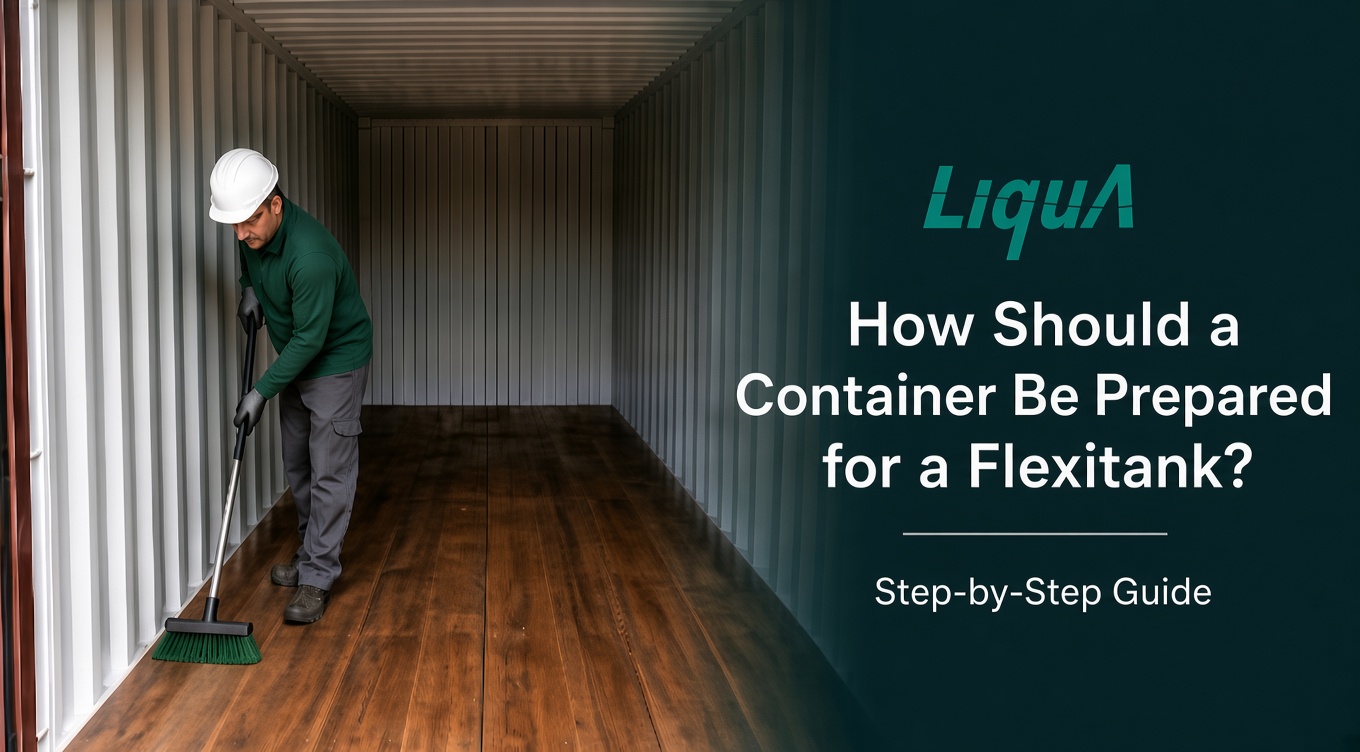
After selecting a suitable container, carry out a thorough internal inspection before installing the flexitank. Sweep the entire floor to remove dust, dirt, and any remaining cargo residue. A clean container not only helps maintain product quality but also makes it easier to identify potential hazards that could damage the flexibag.

Sweeping the Container
As you inspect the container, look carefully for nails, splinters, exposed bolts, sharp edges, or any rough surfaces on the floor and side walls. Remove any objects that could puncture the flexitank and cover uneven areas with heavy-duty duct tape where necessary.
3. Container Lining
Once the container has been inspected and cleaned, determine whether additional lining is required. If the container floor and walls are in good condition and free from splinters, sharp edges, or rough surfaces, lining is generally not necessary. However, if extra protection is preferred, pp fabric provided by LiquA can be used to provide an additional protective layer between the container and the flexibag.

PP fabric lining
Unlike conventional flexitank systems that rely on rigid bulkheads or additional restraint structures, LiquA E-Flex uses an integrated flexible harnessing system. As a result, no bulkhead installation is required during container preparation, simplifying the installation process while maintaining cargo stability.
4. Positioning the Flexitank
Once the container has been fully prepared, position the flexitank correctly before unfolding it. Place the folded flexitank against the right-hand wall of the container, then carefully unroll it towards the front wall and unfold it across the floor as instructed. Correct positioning is essential to ensure the flexibag expands evenly during filling.
Pay close attention to the installation reference marks and maintain the recommended 20 cm distance between the flexitank and the outer end of the container at the door side. This spacing allows the flexibag to achieve its intended shape and capacity during loading. To prevent installation issues, do not remove the factory-applied folding tapes or alter the original folds before filling.
5. Securing the Flexible Harness
After the flexitank has been positioned correctly, secure the integrated flexible harness to the container's floor lashing rings. The harness plays a critical role in stabilizing the flexitank throughout transportation by helping to keep it in its designed position. Always attach the straps to the designated center lashing rings and ensure they are taut but not excessively tight. Incorrect belt tension or attaching the straps to the wrong lashing points may reduce the effectiveness of the harnessing system and increase the risk of the flexibag shifting during transit.
6. Door Protection
Although the harnessing system minimizes movement during transportation, exposed door bolts or sharp edges may still come into contact with the flexitank. To prevent abrasion or punctures, use the supplied carton box as a door protector by dismantling it and positioning it over the door bars as instructed. Proper door protection provides an additional safeguard during transport and helps prevent accidental damage when the container doors are closed.
Frequently Asked Questions
Do all containers require lining?
No.
If the container floor and walls are clean and free from splinters or sharp edges, lining is optional. However, lining does not replace proper inspection.
Can I use an older shipping container?
Yes, provided it meets all structural inspection requirements and is in sound condition.
LiquA E-Flex works differently: the cargo load stays fully contained within the flexitank and does not press against the container walls. This also eliminates side-wall bulging and damage, allowing safe use in A, B and C class containers while reducing operational risk.
Why are floor lashing rings important?
LiquA's flexible harness system is secured directly to the container floor lashing rings to stabilize the flexibag throughout transportation. Correct lashing is essential for maintaining the designed geometry and preventing movement.
Is container cleaning necessary even for non-food cargo?
Yes. Clean containers reduce contamination risks and allow defects such as protrusions or damaged flooring to be identified before installation.
Planning your next flexitank shipment? Let LiquA help you prepare with certified operator training, technical guidance, and global field support to ensure every installation is completed correctly.