

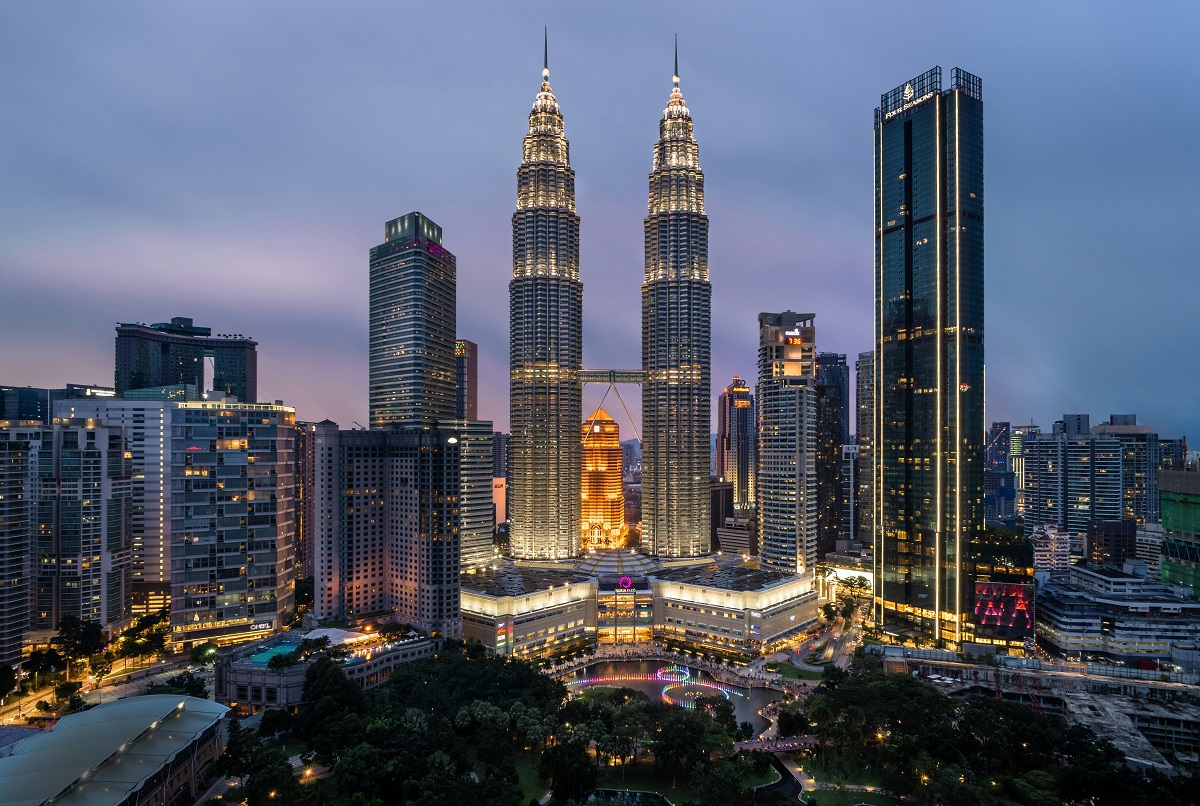
LiquA Malaysia has been operating since 2022, with its office and local flexitank stocks and operations in Pasir Gudang, Johor, and Port Klang, Selangor. The organization was established around the specific needs of Malaysia’s palm oil industry, providing solutions for palm oil and its derivatives from loading in Malaysia through to heating and discharge in the buyer’s country.
Transporting palm oil is not simply a matter of putting liquid into a flexibag. At the loading point, the objective is to carry the highest possible payload safely. At the destination, the same cargo may have solidified and must be heated before it can be pumped out. A solution that performs well during transportation but takes days to heat is not an efficient solution. LiquA therefore designed its Malaysian service around the complete journey rather than flexitank supply alone.
Carrying 27,000 Litres Without Side-Wall Bulging
A conventional flexibag generally carries around 24,000 litres. LiquA’s Jumbo E-Flex can carry up to 27,000 litres of compatible palm oil or palm oil derivatives, subject to cargo density, legal payload limits and route conditions.
The difference is 3,000 litres per container, representing 12.5% more cargo. Across a suitable shipment programme, approximately nine conventional flexibag loads can be reduced to around eight Jumbo E-Flex loads. This can reduce ocean freight, inland transportation, terminal handling and other container-related costs by approximately 11–12%.
For a high-volume palm oil exporter, this is not a minor improvement. The exporter pays most logistics costs per container, not per litre. Increasing the payload spreads those costs across more cargo and reduces the total transportation cost per litre.
However, simply making a conventional flexitank larger creates another problem. A pillow-shaped flexitank expands both upwards and sideways. As more liquid is loaded, greater pressure can be transferred to the container walls, creating side-wall bulging, handling problems and possible rejection by terminals or shipping lines.
LiquA’s patented E-Flex geometry controls the shape and expansion of the loaded flexibag. It allows up to 27,000 litres to be transported without side-wall bulging, subject to the approved operating conditions. The real advantage is therefore not merely higher capacity. It is higher capacity achieved without compromising the container.
The Journey Does Not End When the Container Arrives
Palm oil may be loaded in Malaysia as a liquid but arrive at its destination in a solid or highly viscous condition, especially after travelling through colder climates. Before discharge can begin, the cargo must be heated until it becomes pumpable again.
This is where conventional flexibag systems often become expensive.
A conventional heater pad is positioned underneath the flexitank and heats the cargo from the bottom. The heat must then travel slowly through the complete depth of the palm oil. While the bottom section becomes hot, the upper and outer areas may remain solid. A large amount of energy is also lost through the container floor and side walls during the long heating period.
Under difficult winter conditions, heating palm oil with a conventional heater pad can take up to 14 days. During this period, the container occupies the heating facility, consumes steam and accumulates possible detention, labour and operational costs.
The purchase price of the heater pad may be low, but the final heating operation can be extremely expensive.
From 14 Days to Approximately 18 Hours
LiquA’s H-Flex Steam Liner approaches the problem differently. It combines a 27,000-litre high-capacity flexibag with an integrated steam heating system developed to distribute heat more effectively and homogeneously throughout the cargo.
Instead of relying only on slow bottom-up heat transfer, the Steam Liner exposes a much larger area of the cargo to steam energy. The palm oil reaches a pumpable condition more evenly, reducing the risk of having hot liquid at the bottom while solid cargo remains elsewhere in the flexitank.
Under suitable operating conditions, palm oil that may require up to 14 days with a conventional heater pad can be heated in approximately 18 hours with the H-Flex Steam Liner.
Fourteen days equals 336 hours. Compared with an approximately 18-hour H-Flex heating cycle, the process is almost 19 times faster and can reach approximately 20 times faster performance depending on the cargo condition, ambient temperature, steam capacity and heating procedure.
The difference between 14 days and 18 hours changes the economics of the complete shipment. It reduces steam consumption, heating facility occupancy, labour, container detention and discharge delays. It also allows the receiving facility to process more containers with the same infrastructure.
More importantly, the heating is more homogeneous. Faster heating is of little value if large sections of the cargo remain solid. The H-Flex Steam Liner is designed to bring the complete cargo to a suitable discharge condition more consistently and predictably.
More Than Supplying a Flexibag
LiquA Malaysia does not deliver a flexibag and leave the customer to manage the rest of the operation.
Before loading, LiquA evaluates the cargo, required capacity, container, transport route and destination conditions. The flexitank is then fitted inside the container by trained personnel. During filling, LiquA supervises the connections, loading procedure, filling rate and final volume.
This supervision is important because many flexibag problems are not caused by the product itself but by unsuitable containers, incorrect installation, uncontrolled filling or improper connections. Identifying these risks before the container leaves Malaysia is far more effective than investigating them after arrival.
LiquA’s responsibility also continues at the destination. For customers using the H-Flex Steam Liner, LiquA provides heating supervision in the buyer’s country through its worldwide service network.
The receiving operator is supported in connecting the steam system, applying the correct operating parameters, monitoring the cargo temperature and deciding when the palm oil is ready for discharge. This prevents the advanced heating technology from being undermined by incorrect operation.
In other words, LiquA follows the shipment from flexitank fitting and filling in Malaysia to heating and discharge preparation at the destination.
Why Is the H-Flex More Economical Than a Conventional Heater Pad?
Comparing only the purchase prices of two heating systems gives a misleading result.
The true cost of palm oil heating includes the number of heating days, steam consumption, labour, heating bay occupancy, container detention, demurrage, discharge delays and the amount of cargo remaining inside the flexibag.
A conventional heater pad may appear cheaper before the shipment begins. If it then requires up to 14 days to heat the palm oil, it can become the more expensive solution by the time the cargo is finally discharged.
The H-Flex Steam Liner improves the economics at both ends of the journey. In Malaysia, it can carry up to 27,000 litres without side-wall bulging. At the destination, it can reduce heating time from as long as 14 days to approximately 18 hours under suitable conditions.
This combination is what makes the H-Flex a complete palm oil logistics solution rather than merely another flexitank with a heater.
A Complete Palm Oil Operation from Malaysia to the Buyer
LiquA Malaysia’s Johor Bahru office, together with its stockholding and operations in Pasir Gudang and Kuala Lumpur, gives Malaysian palm oil exporters direct access to equipment and technical support.
The 27,000-litre Jumbo E-Flex increases the cargo carried in each container by 12.5% compared with a conventional 24,000-litre flexitank, while its patented geometry prevents side-wall bulging.
The H-Flex Steam Liner then solves the other major challenge in palm oil transportation: reheating the cargo efficiently before discharge. A process that may take up to 14 days with a conventional heater pad can be completed in approximately 18 hours under suitable operating conditions.
LiquA supports the complete journey through flexibag fitting, filling supervision and heating supervision in the buyer’s country. The objective is not simply to sell a flexitank. It is to carry more palm oil safely, heat it more quickly and reduce the total logistics cost from origin to destination.
Frequently Asked Questions
When did LiquA Malaysia begin operations?
LiquA Malaysia has been operating since 2022.
Where is LiquA Malaysia located?
LiquA Malaysia’s office is in Johor Bahru, with flexibag stockholding and operational services in Pasir Gudang, Johor, and Kuala Lumpur.
What products does LiquA Malaysia primarily serve?
LiquA Malaysia primarily provides flexitank transportation and heating solutions for palm oil and compatible palm oil derivatives.
How much palm oil can the Jumbo E-Flex carry?
The Jumbo E-Flex can carry up to 27,000 litres, subject to cargo density, container payload and route restrictions.
Does the 27,000-litre Jumbo E-Flex cause side-wall bulging?
No. LiquA’s patented E-Flex geometry is designed to prevent side-wall bulging while carrying the higher payload, subject to approved operating conditions.
What is the H-Flex Steam Liner?
The H-Flex Steam Liner combines a 27,000-litre flexibag with an integrated steam heating system developed for fast and homogeneous heating of palm oil and compatible derivatives.
How quickly can the H-Flex heat palm oil?
Under suitable operating conditions, the H-Flex Steam Liner can bring palm oil to discharge condition in approximately 18 hours.
How does this compare with a conventional heater pad?
A conventional heater pad may require up to 14 days under difficult conditions. Compared with an approximately 18-hour H-Flex cycle, the Steam Liner can provide heating up to approximately 20 times faster.
Does LiquA Malaysia only supply flexibags?
No. LiquA Malaysia also provides flexibag fitting and filling supervision.
Does LiquA supervise heating at the destination?
Yes. LiquA provides heating supervision in the buyer’s country through its worldwide service network.