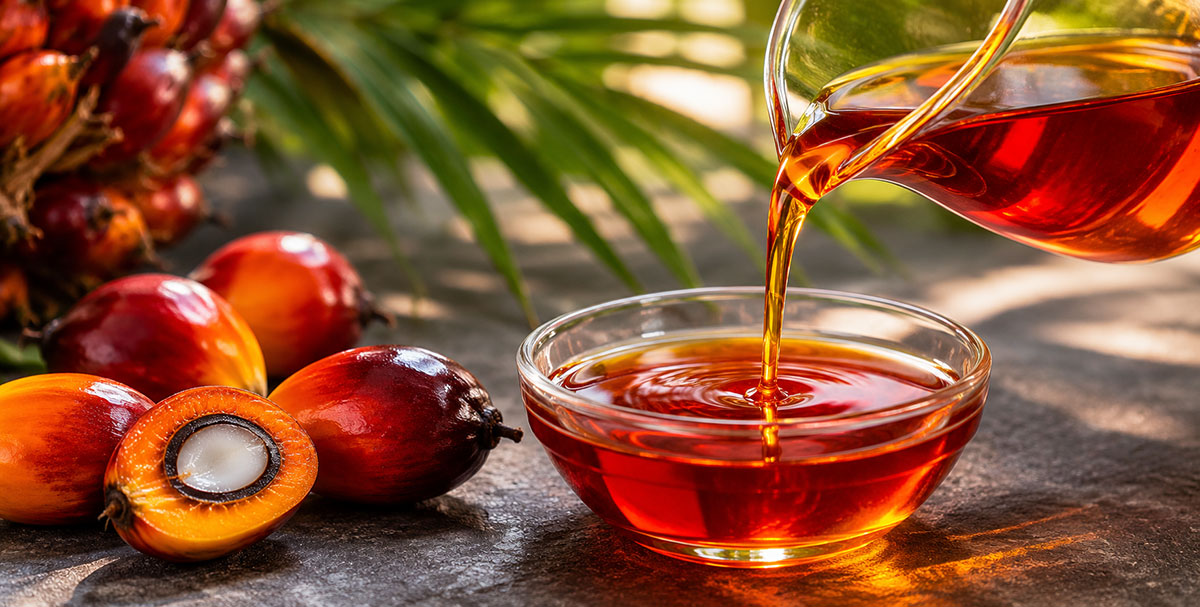
As Europe's palm oil supply chain prepares for new deforestation rules, importers are facing a second challenge: how to transport, heat and discharge bulk palm oil more efficiently without increasing their overall landed costs.
A New Era for European Palm Oil Importers
The European palm oil market is approaching a significant regulatory turning point.
With the EU Deforestation Regulation (EUDR) scheduled to begin applying to large and medium-sized operators on 30 December 2026, palm oil importers are reviewing how they source, document and manage their supply chains.
For European buyers, this is more than a regulatory deadline.
It is an opportunity to reconsider the entire journey of palm oil, from its origin in Southeast Asia to its arrival at European processing facilities.
The next generation of competitive palm oil supply chains will need to combine responsible sourcing with efficient transportation, reliable heating and cost-effective discharge.
While EUDR focuses on the origin and legality of commodities, logistics technology addresses another important dimension of sustainability: how efficiently those commodities are transported and handled.
This is where advanced bulk liquid packaging technologies, including LiquA's high-capacity Jumbo Flexitanks and H-Flex Steam Liner, become increasingly relevant.
What Is EUDR and Why Does It Matter for Palm Oil Imports?
The European Union Deforestation Regulation, Regulation (EU) 2023/1115, aims to reduce the EU's contribution to global deforestation and forest degradation.
Palm oil is one of the commodities covered by the regulation, alongside cattle, cocoa, coffee, rubber, soy and wood, as well as specified derived products.
For European palm oil importers, EUDR introduces requirements intended to ensure that relevant products:
- Are deforestation-free according to the regulation's criteria.
- Have been produced in accordance with relevant legislation in their country of production.
- Are covered by the required due diligence processes and documentation.
A central element is traceability to the land where the relevant commodity was produced.
This represents an important shift from relying exclusively on commercial documentation toward demonstrating the origin and regulatory status of the commodity.
EUDR implementation dates: What European buyers need to know
According to the European Commission's October 2026 guidance, the principal implementation dates are:
| Business category | Application date |
| Large and medium-sized operators | 30 December 2026 |
| Most micro and small operators | 30 June 2027 |
| Micro and small operators already covered by the EU Timber Regulation | 30 December 2026 |
| Certain newly added palm oil derivatives | 30 December 2027 |
The applicable requirements depend on the company's role, size and the precise product classification.
European buyers should review their individual obligations using the European Commission's official guidance.
Beyond EUDR: The Hidden Logistics Challenge for European Palm Oil Buyers
Regulatory compliance is only one part of a successful palm oil import strategy.
European importers must also manage transportation costs, product handling, temperature requirements and delivery reliability.
Palm oil and its derivatives present particular logistical challenges because their physical properties change with temperature.
Crude palm oil, refined palm oil, palm olein and palm stearin have different melting characteristics and handling requirements.
Depending on the cargo composition and transportation conditions, certain palm oil products may partially crystallize or solidify during shipment.
This can make discharge difficult, particularly during colder European seasons.
For buyers receiving cargo in countries such as the Netherlands, Germany, Belgium, Spain and Italy, efficient heating and unloading can be an important part of the overall logistics strategy.
Why conventional palm oil heating can become expensive
Traditional flexitank heating arrangements commonly use heater pads installed beneath the cargo.
These systems transfer heat primarily from the bottom of the flexitank.
When a large volume of palm oil or palm stearin has solidified, heating the entire cargo from a limited surface area can take considerable time.
The consequences may include:
- Extended container occupation.
- Additional heating and steam-system operating time.
- Increased labor and supervision requirements.
- Container detention and demurrage exposure.
- Delays in unloading and production planning.
- Reduced throughput at receiving facilities.
The real cost of importing palm oil is therefore not simply the purchase price plus ocean freight.
It is the total landed cost, including the time and resources required to make the cargo available for production.
A More Efficient Approach: LiquA's 27,000-Litre Jumbo Flexitank
One way to improve palm oil transportation efficiency is to maximize the amount of product carried in each container.
LiquA's Jumbo Flexitank technology offers a nominal capacity of up to 27,000 litres in a standard 20-foot shipping container, subject to cargo density, maximum permitted payload and route-specific restrictions.
Compared with a conventional 24,000-litre flexitank, this represents a 12.5% increase in nominal volumetric capacity.
For large-scale palm oil importers, this can translate into meaningful transportation efficiencies when the higher capacity is permitted.
How much difference can higher capacity make?
Consider a European importer purchasing 540,000 litres of suitable palm oil.
| Conventional 24,000L flexitank | LiquA 27,000L Jumbo Flexitank |
| Nominal capacity | 24,000 L - 27,000 L |
| Total shipment | 540,000 L - 540,000 L |
| Containers required | 23 - 20 |
| Container reduction | 3 fewer |
This illustrative comparison demonstrates how higher payload efficiency can reduce the number of containers required.
The actual result depends on weight limitations, product density and the approved loading capacity of the specific shipment.
Potential benefits include fewer container movements, reduced handling requirements, more efficient freight expenditure and improved logistics resource utilization.
For European importers seeking to reduce their transportation cost per tonne, container capacity should be evaluated alongside freight rates and product handling costs.
H-Flex Steam Liner: Rethinking Palm Oil Heating and Discharge
| Conventional Heating Systems | H-Flex |
| Heat only from bottom | Steam contacts entire surface |
| Small surface area (-3 m²) | Large surface area (-40 m²) |
| Uses sensible heat only | Uses latent heat of condensation + sensible |
| Heating can take weeks | Heating done in hours |
Higher transportation capacity is valuable, but it does not solve every challenge.
For many palm oil importers, the greatest operational difficulties occur after the container arrives.
LiquA's patented H-Flex Steam Liner addresses this challenge through an integrated steam-heating system designed for faster and more homogeneous heat transfer.
Unlike conventional heater pads, which primarily heat the cargo from below, H-Flex uses steam circulation around the flexitank to distribute heat over a larger surface area.
This approach helps transfer thermal energy more effectively to cargo that requires reheating before discharge.
Up to 20 times faster heating
LiquA reports that its H-Flex Steam Liner can heat suitable cargoes up to 20 times faster than conventional flexitank heater-pad systems under comparable application conditions.
In a documented comparison involving palm stearin, LiquA reports that H-Flex enabled complete heating and discharge in approximately 18 hours, while the conventional heating system required 14 days.
These results illustrate the potential operational advantage of integrated heating technology.
Actual performance depends on the product, initial temperature, degree of solidification, steam supply, ambient conditions and required discharge temperature.
For a European processing facility, the difference between waiting days and completing discharge within a substantially shorter period can affect scheduling, container availability and overall operational efficiency.
Does faster heating also mean lower energy consumption?
Not automatically.
Heating speed and energy efficiency are related but distinct measurements.
A faster system may reduce heat losses, heating-station occupation and total operating time. However, actual energy savings depend on the thermal efficiency of the installation, steam consumption and operating conditions.
The economic benefit of H-Flex should therefore be evaluated through total heating and discharge costs rather than heating speed alone.
For importers, this means considering the complete operation: steam consumption, labor, container detention, unloading time and receiving-facility productivity.
Sustainability Beyond the Plantation: Why Logistics Efficiency Matters
The European palm oil sustainability discussion has traditionally focused on deforestation, biodiversity and responsible agricultural production. These remain essential issues.
However, the environmental performance of a supply chain also depends on transportation, packaging, energy consumption and operational efficiency.
An importer transporting the same volume of palm oil in fewer containers may be able to reduce certain logistics-related impacts.
Similarly, a more effective heating system may reduce unnecessary waiting time and energy losses.
These improvements do not replace responsible sourcing.
They complement it.
EUDR compliance is not the same as sustainable transportation
This distinction is important.
A high-capacity flexitank cannot establish whether palm oil originates from deforestation-free land.
Likewise, faster heating does not demonstrate that a product complies with EUDR.
EUDR compliance depends on the applicable regulatory requirements, product origin, documentation and due diligence.
LiquA's role is different: providing transportation and heating technologies designed to improve the operational efficiency of bulk liquid logistics.
For European buyers, both aspects matter.
Responsible sourcing addresses where the product comes from.
Efficient logistics addresses how the product reaches its destination.
What European Palm Oil Importers Should Evaluate in 2027
As regulatory and commercial requirements evolve, palm oil buyers should assess suppliers and logistics arrangements using a broader set of criteria.
1. Origin and traceability
Confirm that the supplier can provide the origin information and documentation required for the relevant product and transaction.
2. Product classification
Different palm oil products and derivatives may have different regulatory treatment and physical handling requirements.
3. Maximum permitted payload
Compare actual cargo capacity in tonnes rather than relying exclusively on nominal flexitank volume.
4. Heating requirements
Evaluate the product's melting behavior, initial temperature and the receiving facility's heating capabilities.
5. Total landed cost
Include freight, packaging, handling, heating, container occupation and discharge expenses.
6. Operational support
Choose a logistics partner capable of providing technical assistance for installation, filling, heating and discharge.
7. Environmental performance
Evaluate transportation efficiency using measurable data, including shipment volumes, container movements and energy consumption.
From Southeast Asia to Europe: A Smarter Palm Oil Supply Chain
Indonesia and Malaysia remain central to international palm oil production and trade.
European buyers importing palm oil and its derivatives from Southeast Asia face long transportation routes, variable shipping conditions and differing discharge requirements.
For products requiring reheating, an integrated transportation and heating solution can provide operational advantages at the destination.
LiquA's technology combines two important features:
Jumbo Flexitank: Up to 27,000 litres of nominal capacity, subject to shipment limitations.
H-Flex Steam Liner: Integrated heating technology designed to accelerate the discharge of palm oil and compatible derivatives.
LiquA also supports flexitank installation and cargo-handling operations through its service capabilities, including its Malaysian operations and international support network.
For European importers, the opportunity is to evaluate transportation capacity and heating performance as parts of a single logistics decision rather than separate cost items.
Frequently Asked Questions: EUDR and Palm Oil Transportation
When does EUDR apply to palm oil imports into Europe?
For large and medium-sized operators, the main application date is 30 December 2026. Most micro and small operators have until 30 June 2027. Specific exceptions and later dates apply to certain business categories and newly added products.
Does EUDR ban palm oil imports into the European Union?
No. EUDR does not impose a general ban on palm oil. It establishes requirements for relevant products placed on the EU market, including deforestation-free production, legality and applicable due diligence obligations.
Does using a sustainable flexitank make palm oil EUDR-compliant?
No. EUDR compliance depends on the origin and regulatory status of the commodity and the applicable due diligence requirements. Transportation efficiency alone cannot establish compliance.
Can palm oil be transported in a flexitank?
Yes. Suitable palm oil products and derivatives can be transported in approved flexitanks, provided the cargo characteristics, packaging compatibility and transportation conditions are appropriate.
How much palm oil can a 20-foot container carry?
LiquA offers Jumbo Flexitank systems with nominal capacities of up to 27,000 litres. The actual loading volume depends on cargo density, maximum gross container weight, route restrictions and approved operating conditions
Why does palm oil need heating before discharge?
Certain palm oil products can become more viscous or partially solidify during transportation. Controlled heating may be necessary to restore suitable pumping conditions.
What is the fastest way to heat palm oil in a flexitank?
Integrated steam-heating systems such as LiquA's H-Flex Steam Liner can provide faster heat transfer than conventional bottom-mounted heater pads under suitable conditions. Heating procedures must be adapted to the specific cargo.
Can faster palm oil heating reduce import costs?
Potentially. Faster heating may reduce container occupation, labor, heating-system operating time and discharge delays. Actual savings depend on operating conditions and the receiving facility.
How can European palm oil importers reduce their logistics footprint?
Importers can evaluate higher container payloads, fewer container movements, optimized routes, improved heating efficiency and measurable energy consumption, alongside responsible sourcing and regulatory compliance.
Conclusion: Responsible Sourcing Meets Smarter Logistics
The future of European palm oil imports will not be defined by regulatory compliance alone.
Importers will also need to remain commercially competitive while improving the efficiency and reliability of their supply chains.
EUDR is accelerating attention to commodity origin and traceability.
At the same time, high freight costs, energy consumption and complex cargo-handling requirements continue to influence purchasing decisions.
These challenges create an opportunity to rethink traditional bulk liquid transportation.
With its high-capacity Jumbo Flexitank and patented H-Flex Steam Liner, LiquA offers technology designed to help European palm oil importers transport more cargo per container and reduce the time required for heating and discharge.
Responsible sourcing begins at the plantation. Efficient logistics continues all the way to the receiving facility.
Looking for a More Efficient Way to Import Palm Oil into Europe?
Whether your company imports crude palm oil, refined palm oil, palm olein or palm stearin, LiquA can help you evaluate suitable high-capacity flexitank and heating solutions.
Explore "LiquA's H-Flex Steam Liner" (https://www.liquatrans.com/en/products/h-flex/) and discover how advanced bulk liquid transportation technology can support your European palm oil supply chain.
LiquA - More Cargo. Faster Heating. Smarter Logistics.
References and Further Reading
- "European Commission - Regulation on Deforestation-free Products" (https://environment.ec.europa.eu/topics/forests/deforestation/regulation-deforestation-free-products_en)
- "European Commission - EUDR Implementation and Guidance" (https://green-forum.ec.europa.eu/nature-and-biodiversity/deforestation-regulation-implementation_en)
- "European Commission - July 2026 EUDR Product Scope and Digital Tools Update" (https://environment.ec.europa.eu/news/commission-updates-product-scope-and-tools-support-eudr-2026-07-13_en)
- "LiquA - H-Flex Steam Liner" (https://www.liquatrans.com/en/products/h-flex/)
- "LiquA - Palm Oil Flexitank Malaysia: 27,000L Transport and Fast Heating" (https://www.liquatrans.com/en/blog/palm-oil-flexitank-malaysia-27000l-transport-and-fast-heating/)
Published: October 2026. Regulatory information reflects European Commission guidance available at the time of publication. Transportation capacity and heating performance depend on cargo characteristics and operating conditions.